

There are hotels you choose for the view, others for the location, and some for their design. Then there are places that leave you with the feeling that you have not simply checked out of a hotel, but said goodbye to a story.
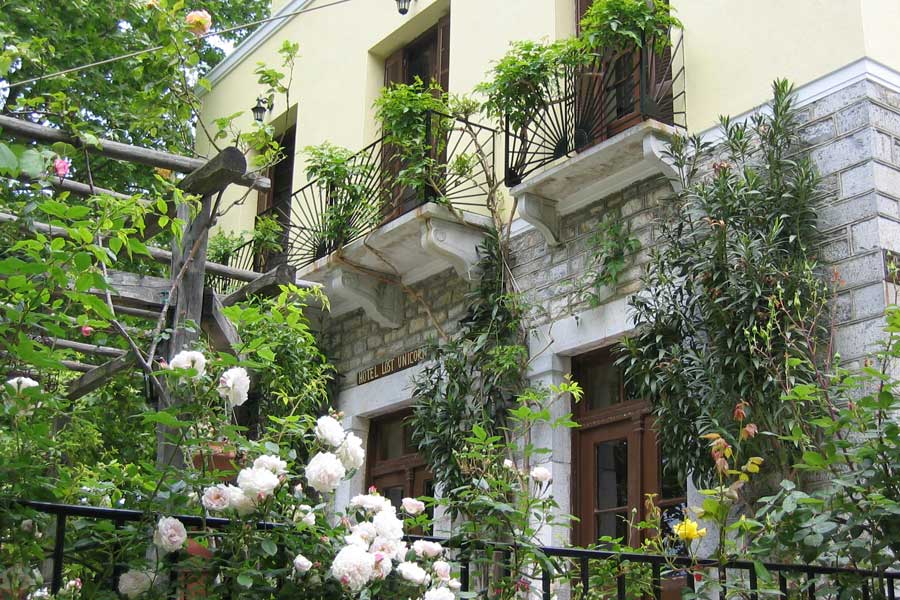
The Lost Unicorn—set in Tsagarada, on the Pelion peninsula—belongs firmly to the latter category. Located on the square of Agia Paraskevi, in the heart of the village, the hotel sits beside the church and directly opposite Tsagarada’s legendary plane tree.
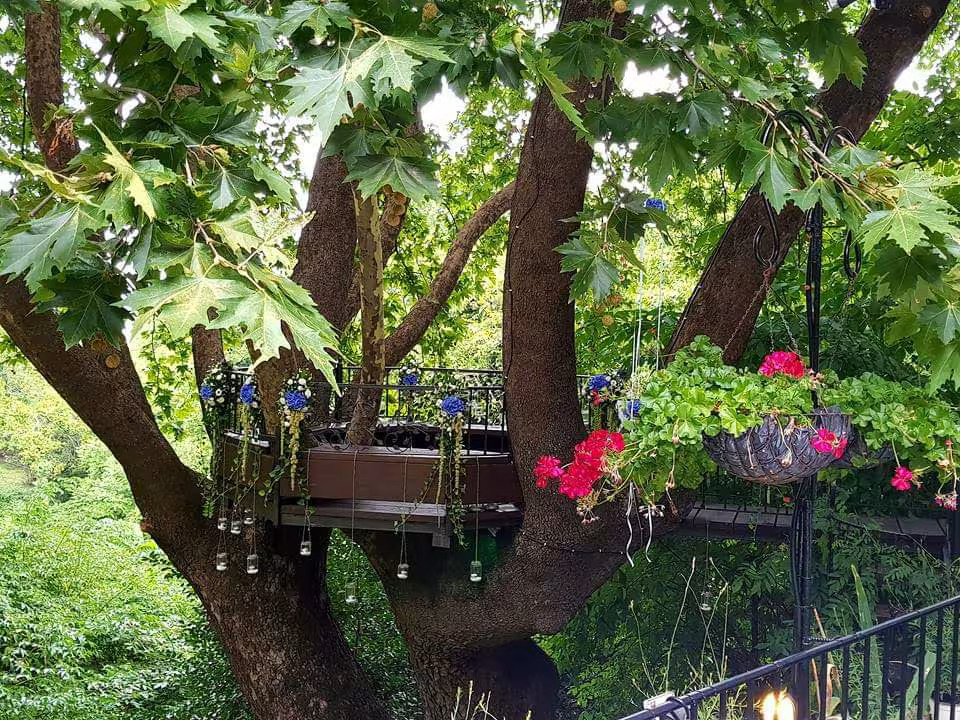
Housed in an 1890 mansion, the property offers just eight rooms. Here, Claire and Christos have created a space that brings together the history of Pelion, their personal tastes, music, literature, art, and genuine hospitality. From the moment you arrive, it is clear that The Lost Unicorn feels anything but impersonal. The owners live in the same building alongside their rescued animals, giving the experience a distinctly personal character.
In the Heart of Tsagarada
Location is one of the hotel's greatest assets. Tsagarada stretches across four historic neighbourhoods: Agia Paraskevi, Agioi Taxiarches, Agios Stefanos, and Agia Kyriaki. These areas are connected by traditional stone-paved paths and trails winding through Pelion’s dense greenery.
The square of Agia Paraskevi is home to one of the village’s most extraordinary natural landmarks: a monumental plane tree estimated to be around 1,000 years old. What makes it even more remarkable is how seamlessly it blends into local life. There is no special route leading to it, no dramatic entrance. You simply sit in the square with a coffee and suddenly realise that the tree standing in front of you has witnessed centuries of history.
A House with a Soul
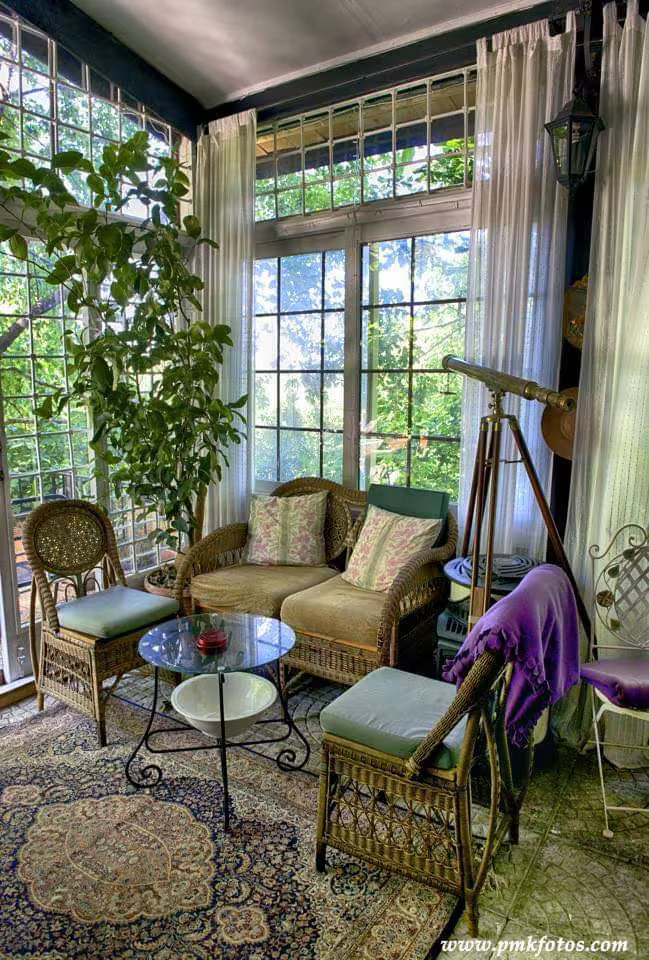
The Lost Unicorn has preserved many of the features of its 19th-century mansion origins. Inside, guests will find antiques, vintage furniture, books, and a library where visitors can read or listen to vinyl records.
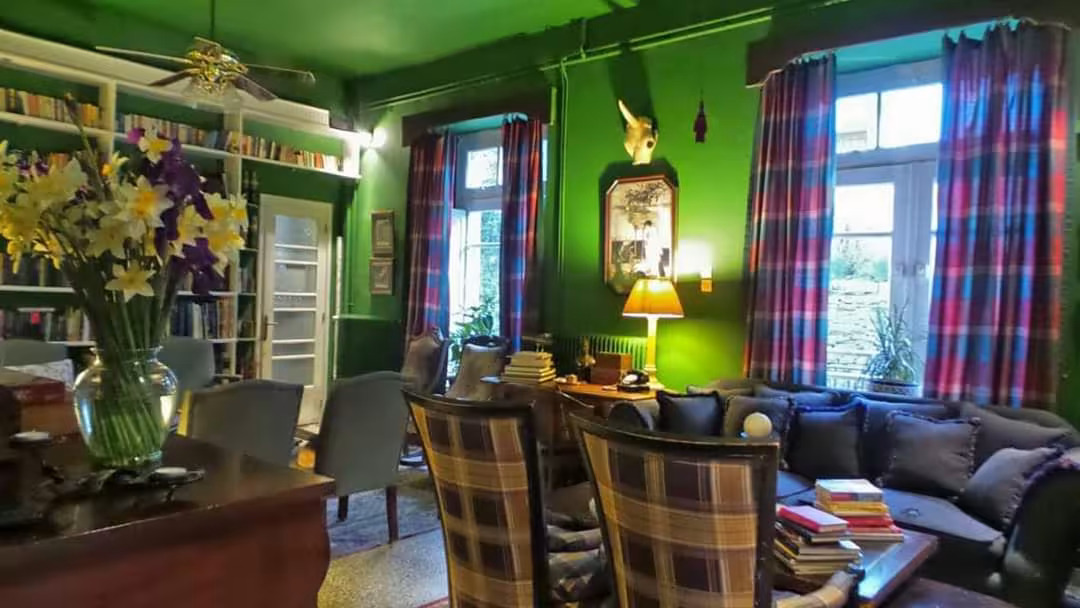
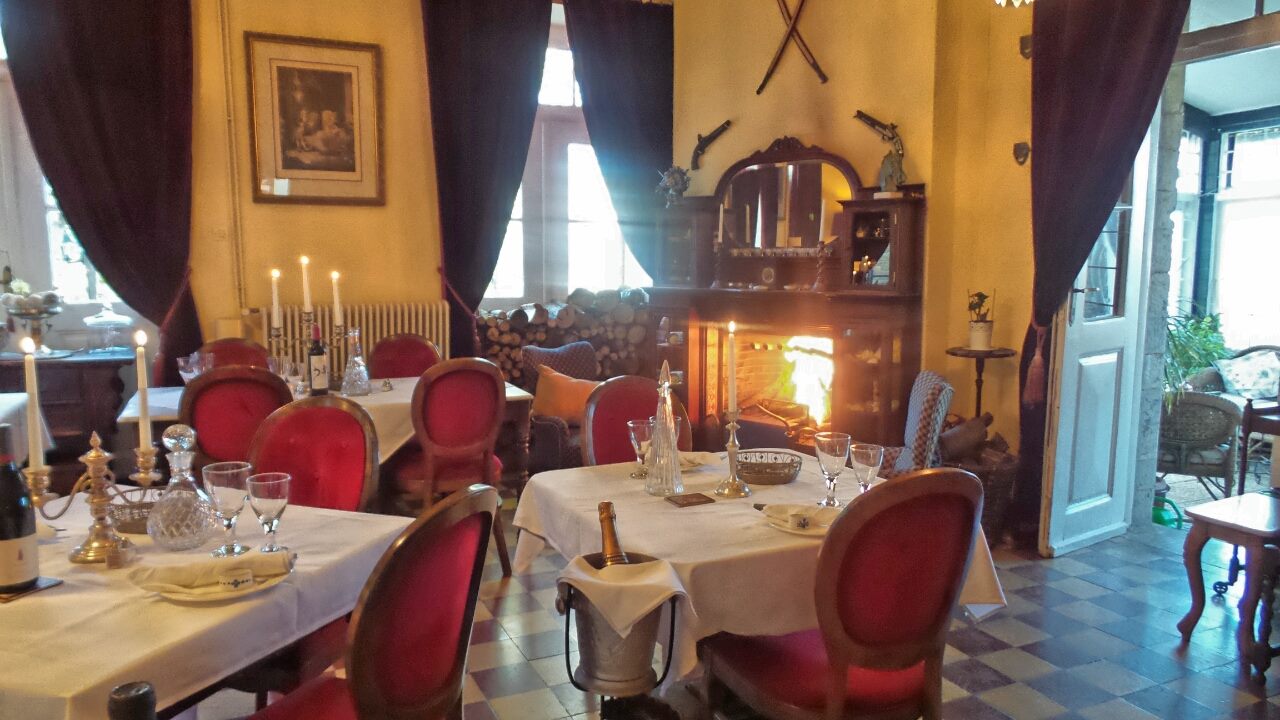
There is an elegant lounge filled with antiques and a bar, while the restaurant combines crystal chandeliers, velvet chairs, a piano, and a fireplace to create a refined yet welcoming atmosphere.
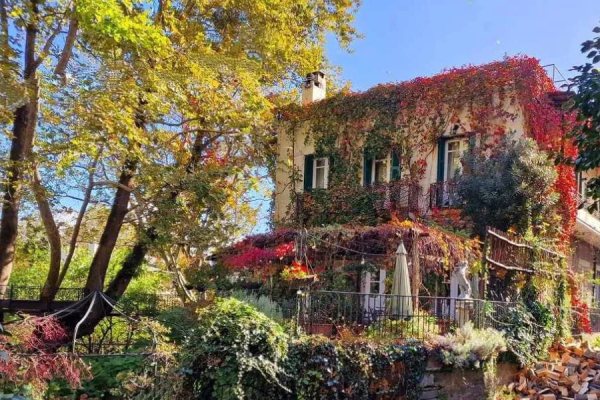
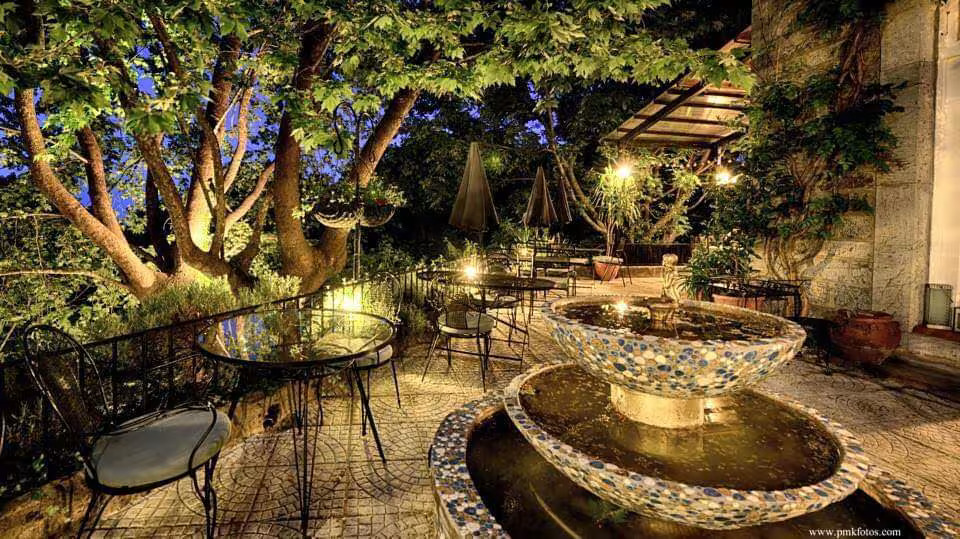
Then there is the garden.
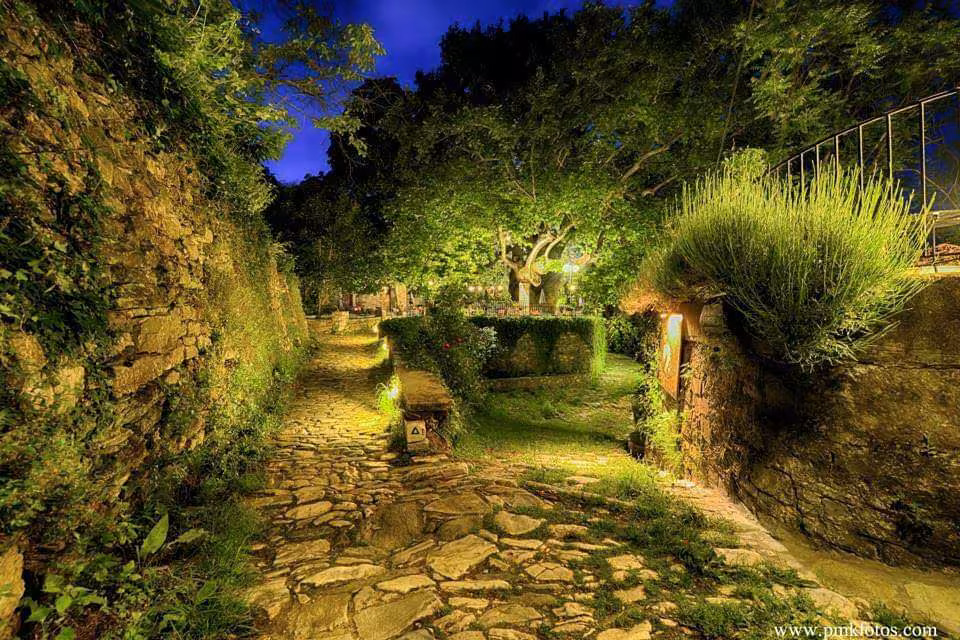
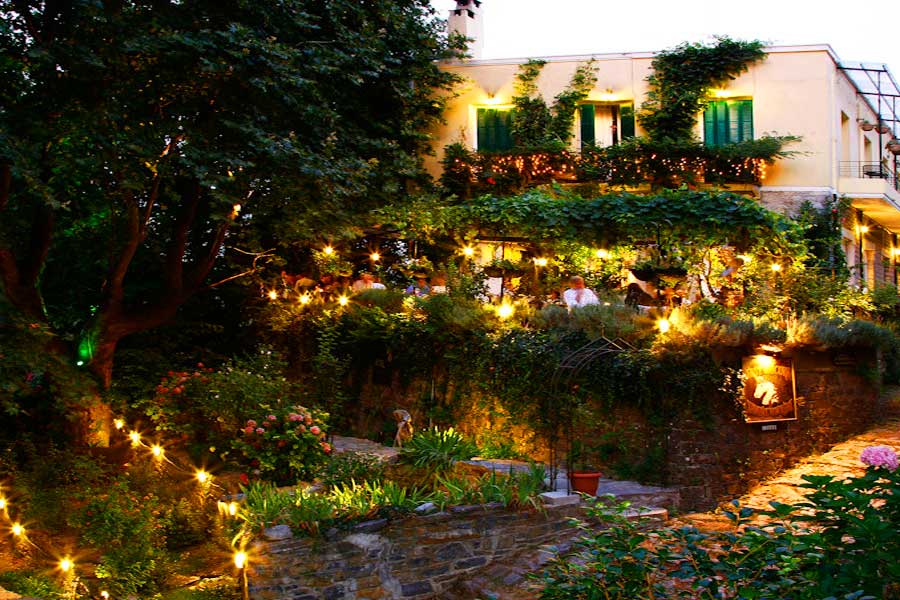
More than simply an outdoor space, it feels like a world of its own—a secluded sanctuary filled with trees, flowers, and magnificent hydrangeas that seem to have stepped out of an English novel. Hidden among the greenery stands a treehouse, one of those special corners that makes guests forget they are staying in a hotel at all. It is a place to sit, read, or simply gaze out over the garden. Perhaps that is the greatest luxury here: having absolutely nothing urgent to do.
Breakfast, Books, and Four-Legged Residents
Breakfast at The Lost Unicorn is one of those simple daily rituals that becomes part of the memory of a stay.
The menu includes a traditional English breakfast—a nod to the hotel's British influences—alongside local products and regional flavours. Around the breakfast tables, guests from different countries gather for different reasons. Some have come for hiking, others to discover Pelion, while some simply seek a few days of tranquillity in nature. Some read novels; others leaf through poetry collections. It is an atmosphere perfectly suited to the spirit of The Lost Unicorn.
Guests will also meet some of the cats and dogs adopted by Claire and Christos—permanent residents who contribute as much to the character of the hotel as its furnishings and bookshelves.
More Than a Hotel
The owners themselves are an essential part of the hotel's identity.
As a family-run business, they have envisioned a place where hospitality, culture, and nature coexist. This philosophy is reflected in the events hosted throughout the year, from jazz and spoken-word performances to theatre productions, film screenings, and other artistic activities.
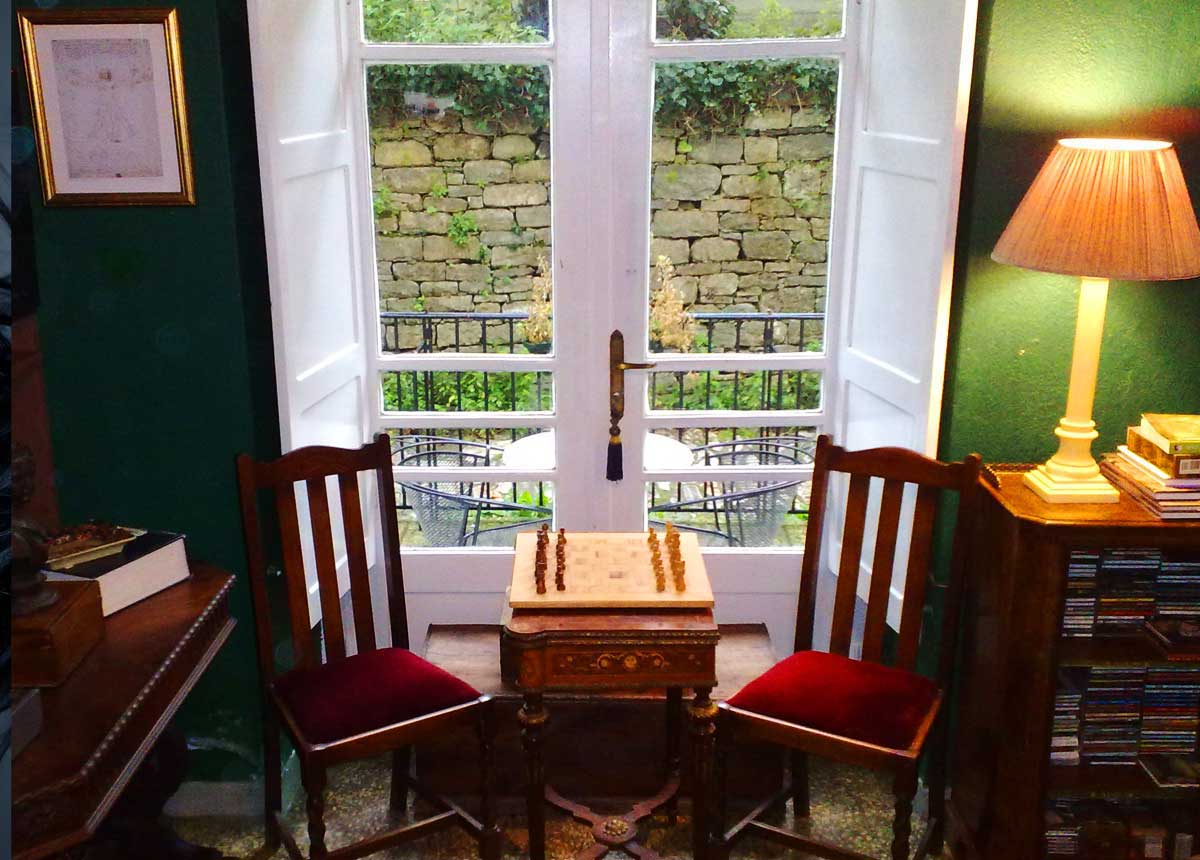
The Lost Unicorn does not function solely as a place to stay. It feels more like a small cultural retreat where books, music, and art aren't merely decorative additions, but integral parts of everyday life.
Discovering Another Side of Tsagarada
Beyond its famous beaches, Tsagarada offers layers of history waiting to be explored.
One of the village’s most notable landmarks is the Nanopouleios School, located on the square of Agia Paraskevi. Built in 1909 through a donation from benefactor Nikolaos Nanopoulos, it has been officially recognised by the Greek state as a work of art. Another important building is the Achillopouleios Commercial School, connected to the area’s tradition of benefactors and philanthropy.
These institutions tell the story of Pelion’s diaspora communities: local people who built successful commercial careers abroad before returning to invest in education and the development of their home villages. Behind the cobbled lanes and grand mansions lies a fascinating history of trade, migration, philanthropy, and learning.
The Art of Slowing Down
Tsagarada is one of those places where there is little reason to plan every moment.
Leave the car behind and wander from one village square to another. Follow old stone paths without worrying about your destination. Visit historic churches, fountains, and school buildings. Spend time at the beaches of Mylopotamos and Fakistra, and explore nearby Damouchari.
And if you are staying at The Lost Unicorn, you may even have the opportunity to take the hotel's dog for a walk—assuming he’s in the mood to join you.
It may be the perfect Pelion itinerary: a little walking, good food, a swim in the sea, a book, an English breakfast, a coffee beneath the ancient plane tree, and plenty of hours of relaxation.
A Place of Creativity and Inspiration
A short distance away lies Mouresi, a village with its own place in Greece’s artistic history. It was here that renowned Greek singer-songwriter Dionysis Savvopoulos kept a home for many years. More than simply a holiday house, it became a personal refuge and a gathering place for friends, artists, and younger musicians. His connection with Pelion influenced both his creative life and some of the songs he composed there.
Like many others, Savvopoulos found in Pelion not merely a holiday destination, but a place of solitude, inspiration, and creation.
Returning to The Lost Unicorn
The Lost Unicorn is not a hotel that strives to impress through extravagance. Its appeal comes from something more enduring.
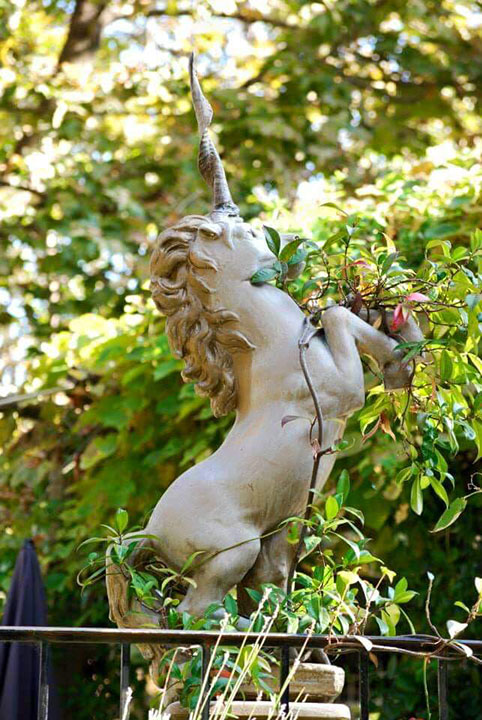
It has character because it has history. It has personality because its owners have left their mark on every corner of it. Most importantly, it possesses that rare quality shared by the best small hotels—a quality that photographs rarely capture. It makes you feel, however briefly, as though you have become part of the life of the place itself.
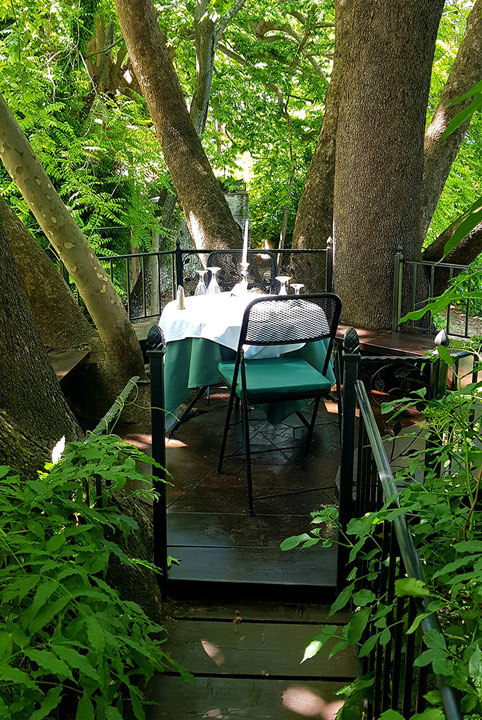
Perhaps that is why guests return: not simply to a hotel, but to a house hidden among the greenery of Pelion.
Pelion, after all, needs little introduction. It is a place where mountain and sea coexist, where cobbled paths lead through deep forests, and where history survives in mansions, stories, and the people who have left behind something far more meaningful than a name.