

By Georgia Skamaga
Cape Sounio
At the southernmost tip of the Attic peninsula, Cape Sounio offers a timeless spectacle: the sun dipping into the Aegean as you stand among the ancient marble columns of the Temple of Poseidon. Just 70 kilometers from central Athens, the coastal drive unfolds beside some of the bluest waters imaginable. Stop along the way to savor fresh fish and traditional meze at seaside tavernas, or cool off with a swim in the crystal-clear coves near Legrena or Lavrio – perfect escapes from the city’s pulse.
While Athens is world-famous for its ancient landmarks, the surrounding region also holds a wealth of archaeological wonders. Just a short drive from the city, visitors can discover sacred sanctuaries, powerful Bronze Age cities, healing centers, and theaters still echoing with the voices of ancient drama. These sites not only offer insight into Greece’s rich past but also provide a deeper understanding of how culture, religion and politics shaped the ancient world. Below are some of the most fascinating archaeological destinations near Athens.
Delphi
Located about two and a half hours northwest of Athens, Delphi was once the most important religious center in the Greek world. Perched on the slopes of Mount Parnassus, it was home to the famous Oracle of Apollo, where pilgrims came to seek guidance from the god through his priestess, the Pythia. The Sanctuary of Apollo, the ancient theater, and the stadium are just a few of the well-preserved structures that still inspire awe today. Delphi also offers stunning natural scenery and a strong sense of spiritual history.
Epidaurus
Situated in the northeastern Peloponnese, Epidaurus is best known for its magnificent theater, considered one of the finest examples of classical Greek architecture. Built in the 4th century B.C., it is renowned for its perfect acoustics and symmetry, and it still hosts performances during the summer. Epidaurus was also a major healing center dedicated to Asclepius, the god of medicine. The sanctuary included temples, baths and other facilities where the sick would come for treatment and divine dreams.
Mycenae
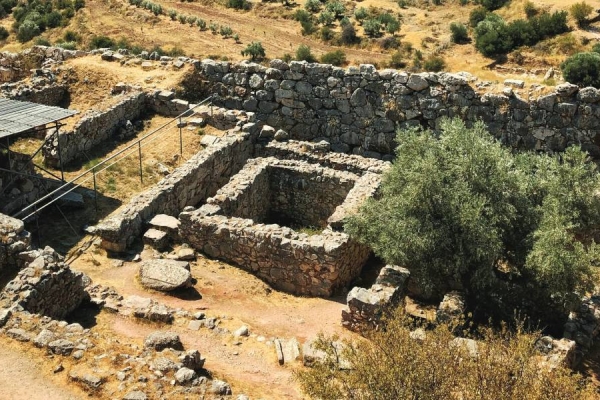
About 90 minutes from Athens, Mycenae was a major center of Greek civilization during the late Bronze Age (1600-1100 B.C.). According to legend, it was ruled by King Agamemnon, leader of the Greeks in the Trojan War. The site features the famous Lion Gate, royal tholos tombs, and the massive “Cyclopean” walls. Mycenae gives visitors a glimpse into a more ancient and mysterious past, long before the time of classical Athens.
Lavrio and Thorikos
Tucked into a windswept hillside in Lavreotiki, the ancient theater of Thorikos might just be the oldest in Greece – and it comes with a sea view! The area around modern-day Lavrio, southeast of Athens, was once a center of mining and industry. Visitors can explore its unusual elliptical theater, dating back to the 6th century B.C., and walk among the remains of mining installations and ancient homes. The silver extracted from Lavrio’s mines helped finance the Athenian navy, playing a crucial role in the city’s rise to power.
Vravrona
Skip the crowds and head east to Vravrona – a peaceful, atmospheric site just 30 minutes from Athens. Here you’ll find the ancient sanctuary of Artemis, a goddess of nature and wildlife, set beside a quiet coastal wetland. Stroll among columns, ancient walkways, and the small but impressive museum. The landscape is wild, open, and full of birdsong – a perfect mix of history and serenity. Few tourists make it here, making Vravrona a rare treat for curious travelers looking to experience ancient Greece in a calm, almost untouched setting.
Rhamnous
Hidden in the hills near the village of Grammatiko, Rhamnous is a forgotten jewel of Attica. Once a fortified ancient city, it boasts a temple to Nemesis (goddess of justice), a small theater, and remnants of walls and homes – all set high above the Aegean. The views are stunning, and the atmosphere is peaceful, with hardly any visitors. Bring water, walking shoes, and a sense of wonder – this place rewards explorers who like their history raw and their surroundings quiet. It’s a true escape from modern noise, just over an hour from the city.
Nea Makri
In the coastal town of Nea Makri lies a rare archaeological surprise, a sanctuary dedicated to Egyptian deities such as Isis and Serapis. This unique site shows the cultural exchange that took place in the Hellenistic period, when Greek and Egyptian religious practices began to mix. Although smaller than other sanctuaries, it is an intriguing reminder of the ancient world’s complexity and openness to foreign ideas.
Oropos and the Amphiareion
In northern Attica, near the village of Kalamos, lies the Amphiareion of Oropos, a lesser-known but fascinating sanctuary dedicated to Amphiaraos, a hero, prophet, and healer. Much like Epidaurus, it served as a healing center where visitors would sleep in the sanctuary (a practice called “incubation”) in hopes of receiving dreams with divine messages. The site includes a small theater, baths, altars, and a sacred spring, all set in a peaceful, forested valley.